
Virginia Basement Finishing Produces Full Kitchens
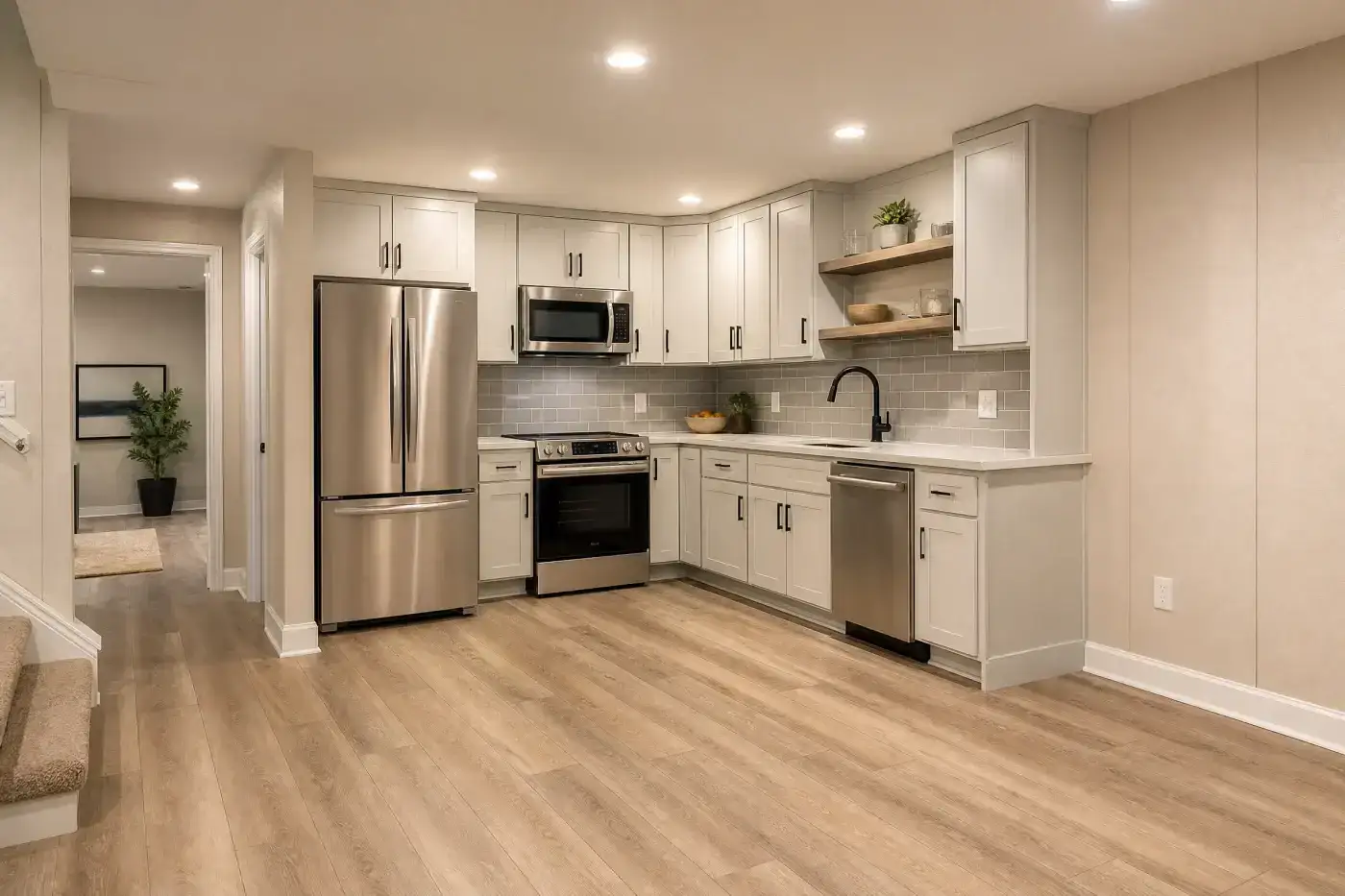
Yes, you can add a full kitchen during basement finishing in Virginia. Plumbing, a permit, and egress drive most of the cost, not cabinets. We build on the Owens Corning system, not damp drywall. Expect a permit and rough-in work before finish work starts. We at Owens Corning Basement Finishing Systems by Lux Renovations scope plumbing first.
Can You Add A Full Kitchen During Basement Finishing In Virginia?
What A Full Basement Kitchen Actually Requires
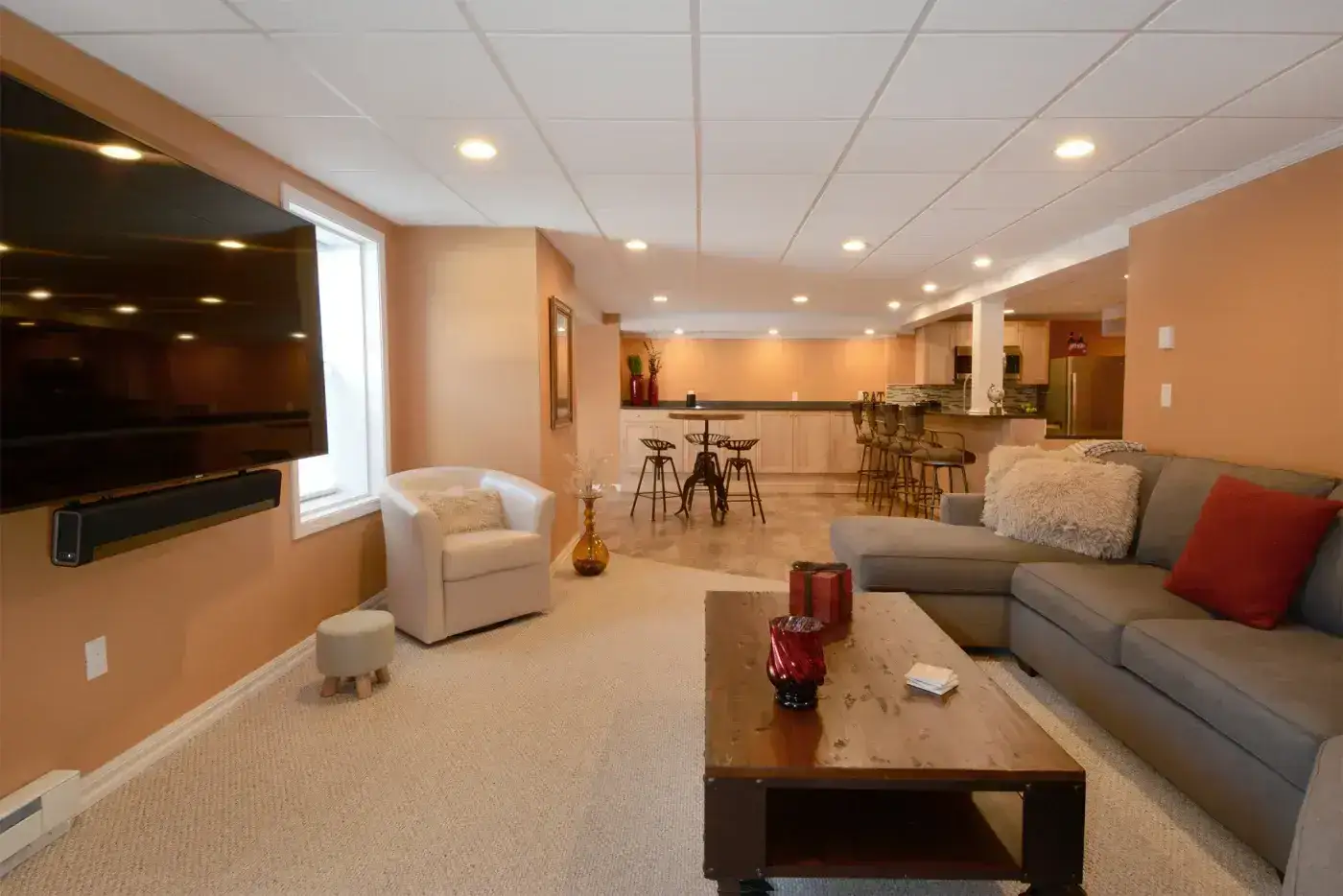
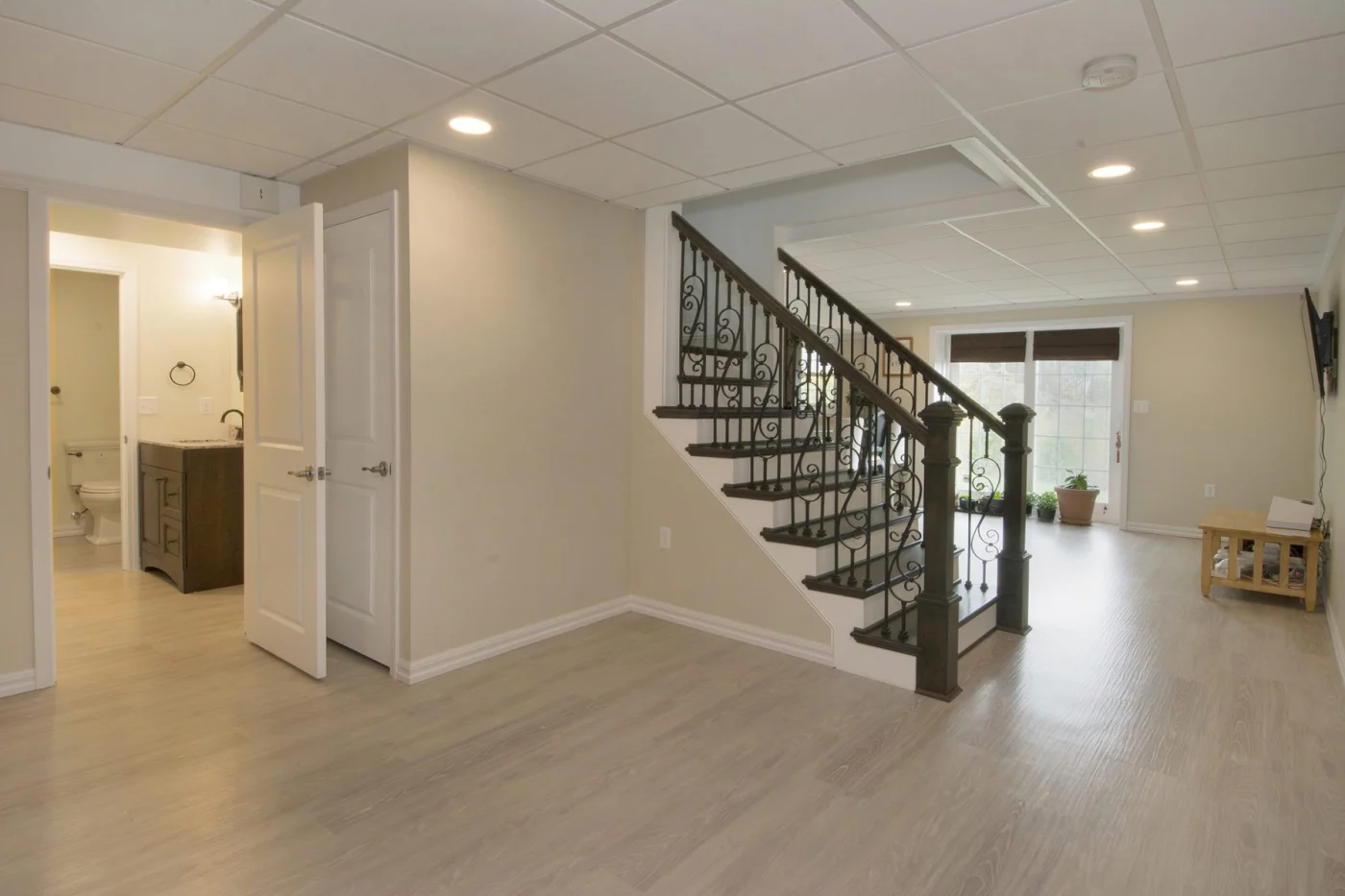
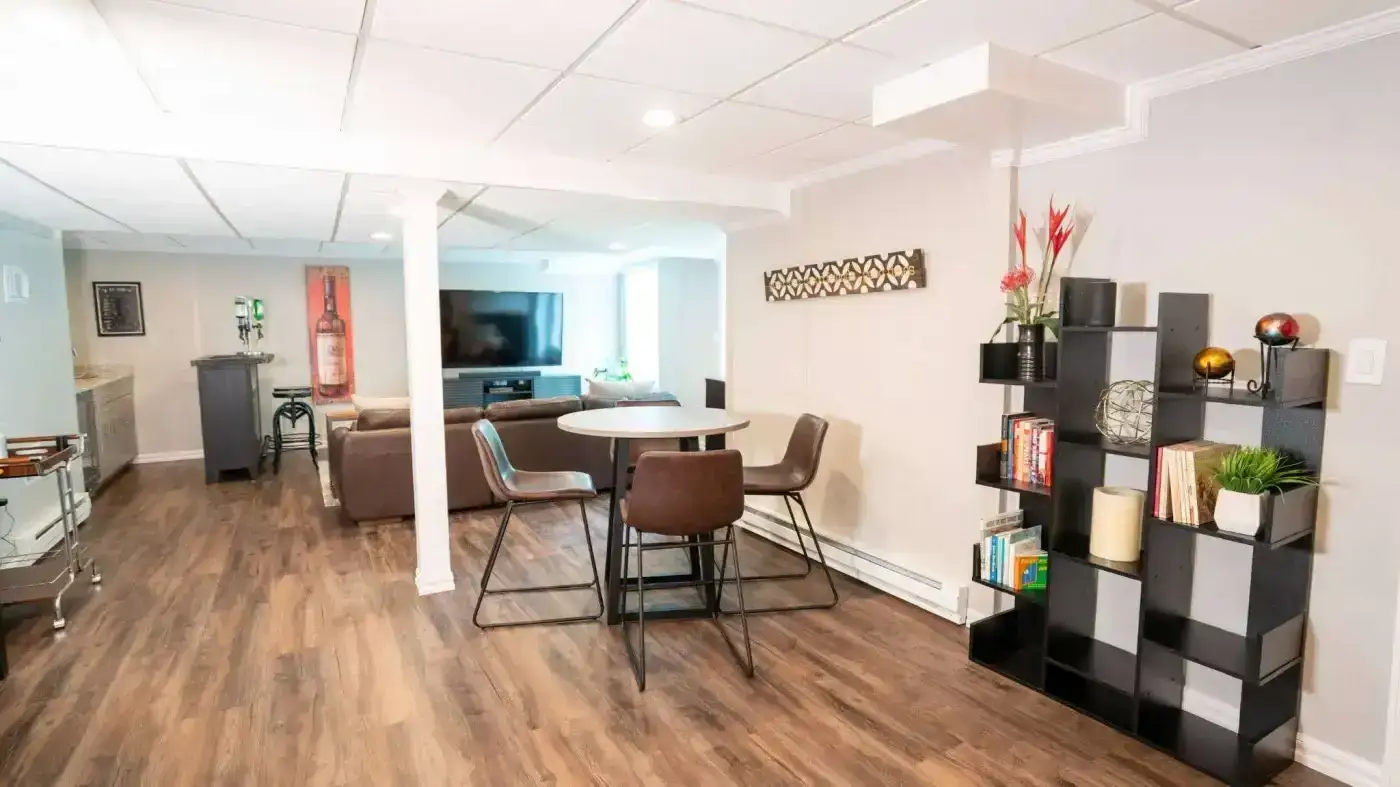
Basement finishing turns an unfinished concrete box into livable, code-approved rooms. A full kitchen pushes that project further than most homeowners expect. You can absolutely do it, and basement finishing in Virginia makes a lower-level kitchen realistic when the plumbing and permits are handled right.
The word “full” is where budgets shift. A wet bar with a sink is one thing. A kitchen with a range, a hood, cabinets, and a dishwasher is a plumbed and vented room that has to pass inspection.
Most of the cost lives below the slab, not above it. Drain lines, a vent stack, and the electrical load carry more weight than the cabinets you pick.
Plumbing Is The First Basement Finishing Question In Virginia To Ask
Your basement floor sits below your main sewer line in many homes. That single fact decides how a basement kitchen drains. When gravity won’t carry waste out, we install a sewage ejector pump, a sealed pit that lifts waste up to the main line.
A dishwasher and a kitchen sink both need a vented drain. Cutting into the slab to run new drain lines is the step that surprises homeowners on basement finishing in the Mid-Atlantic region. It’s real work, and we scope it before we quote.
The good news is that a proper rough-in only happens once. When we plan the Owens Corning basement finishing system around the plumbing first, the finish work goes clean.
Permits, Egress, And Basement Finishing Code
A kitchen changes how a room is classified. Add a kitchen plus a bedroom and a bathroom, and you’re building a basement apartment, which triggers stricter code. That isn’t a reason to stop. It’s a reason to plan.
Local code ties habitable rooms to egress, meaning a code-sized window or door people can escape through in a fire. If your lower level lacks one, an egress window well gets added to the scope.
Every full basement kitchen we build starts with a permit and ends with an inspection. Skipping that step is the fastest way to fail a future home sale. We pull the permit so the finished room is legal on paper.
Some multi-generational basement finishing plans lean toward in-law suites, which is exactly where egress and permits matter most.
Why Owens Corning Basement Finishing Beats Drywall
A kitchen produces steam, splashes, and spills. Standard drywall in a below-grade room soaks that up and grows mold behind the paint. This is the core basement finishing system versus drywall question.
The Owens Corning wall panels are inorganic, so they won’t feed mold the way paper-faced drywall does. Panels also carry a sound-dampening rating, which matters when the playroom sits under a bedroom.
The panels also come off and reattach for access. If a drain line ever needs service, a plumber reaches it without cutting open and repainting a finished wall. For a basement kitchen, that access is worth real money over the years.
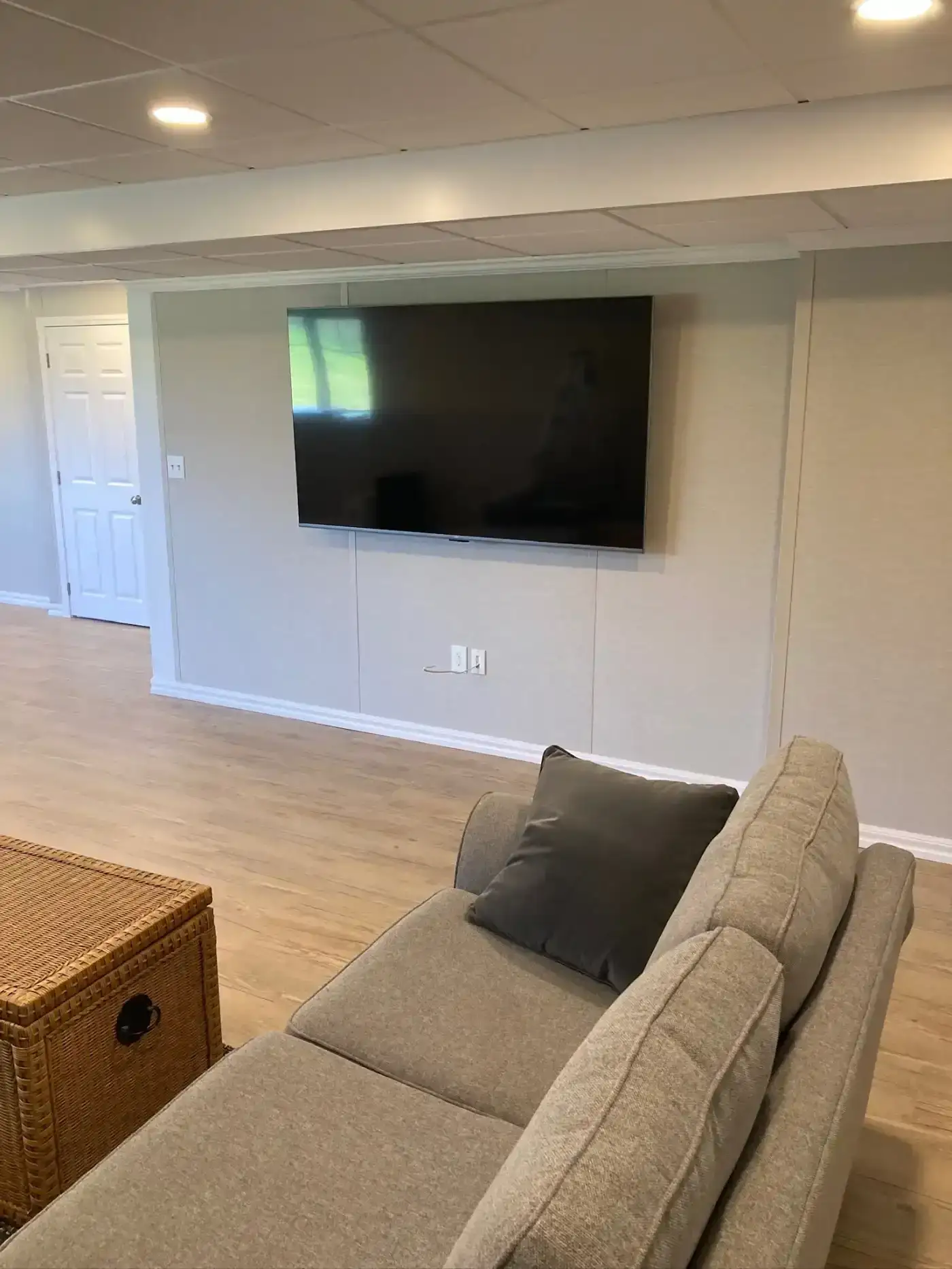
Warmth is the other reason homeowners notice the difference right away. The insulated panels take the cold-concrete feel out of a lower level, so the finished basement feels like part of the home.
What Virginia Basement Finishing With A Kitchen Costs
Homeowners always ask how much it costs to finish a basement with a kitchen. The honest answer is that plumbing access, not finishes, sets the number. A basement already stubbed for plumbing costs far less than one that needs a full slab cut and an ejector pump.
A finished-basement layout without a kitchen carries one price. Adding a plumbed, vented, permitted kitchen adds a defined set of line items on top: drain work, the pump if needed, electrical, cabinets, and appliances.
Is finishing a basement worth it with a kitchen included? For a rentable apartment or an in-law suite, the added square footage often returns strong value. We put the basement finishing financing options in writing before any work starts, so there are no mid-project surprises.
Our certified basement finishing installers handle the plumbing rough-in and finish work as one team, which keeps the schedule tight.
Schedule Your Basement Finishing Consultation In Virginia
Ready to find out if a full basement kitchen works in your home?
Here at Owens Corning Basement Finishing Systems by Lux Renovations, we start every basement finishing project in Virginia by scoping the plumbing and checking egress before we quote a dollar. Get started today with a free estimate!
Common Questions About Basement Finishing In Virginia
Homeowners planning a lower-level kitchen tend to ask the same practical questions. Here are the three that come up most often on local projects.
Does drywall really fail in a basement kitchen?
Kitchens produce steam and splashes, and paper-faced drywall grows mold below grade. The Owens Corning basement finishing system uses inorganic panels that resist moisture and come off for plumbing access, which suits a kitchen far better.
How long does a basement kitchen add to the finishing timeline?
Plumbing rough-in and the extra inspection add time on top of a standard finished basement. We map the schedule during planning so you know when the slab work, rough-in, and finish stages happen.
What drives the price of basement finishing in Virginia?
What plumbing does a below-grade kitchen sink need?
A sewage ejector pump, if your floor sits below the sewer line. It’s a sealed pit that lifts waste up to your main line when gravity won’t carry it. We confirm which method your home needs before quoting the basement finishing scope.