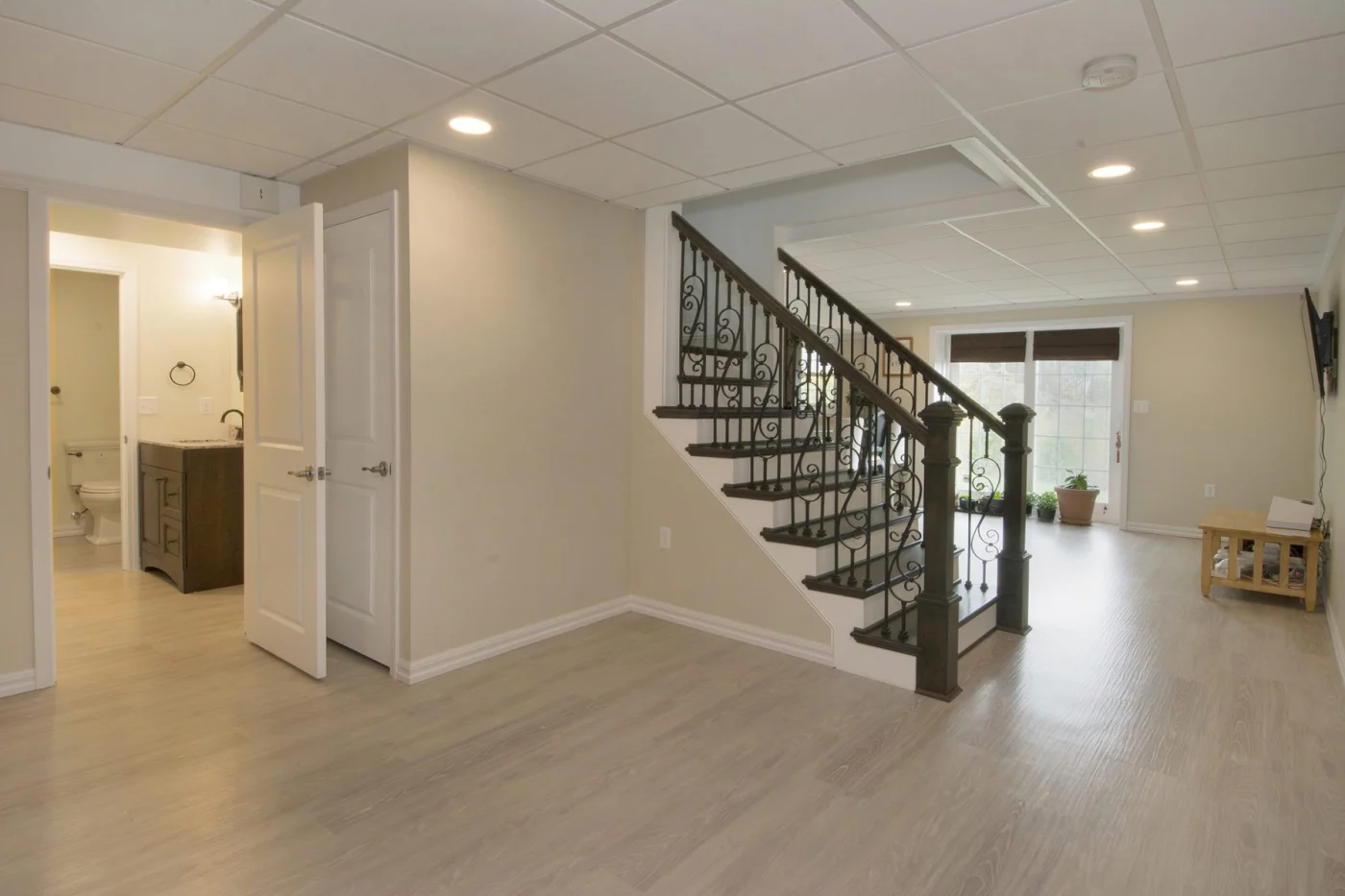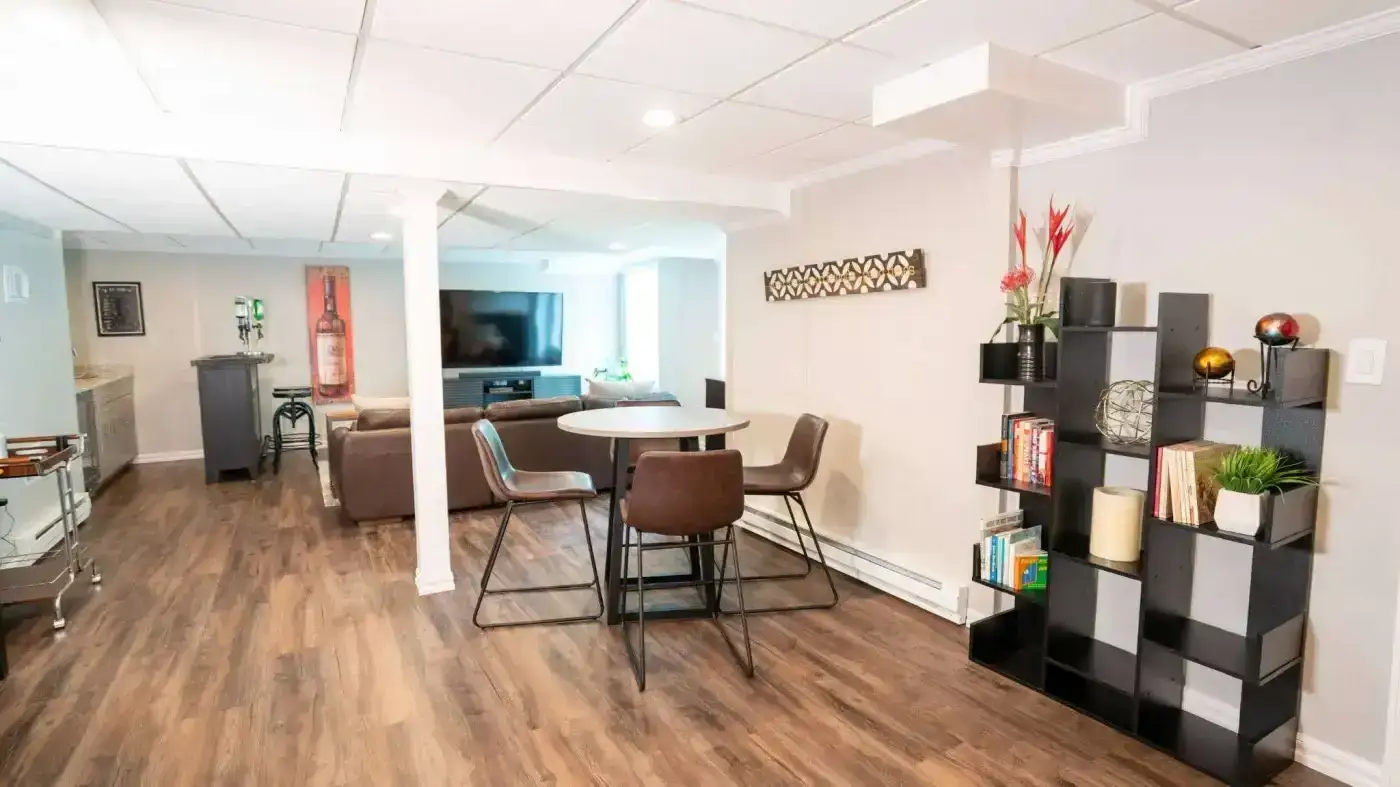

Winter Ready Basement Finishing In Rhode Island
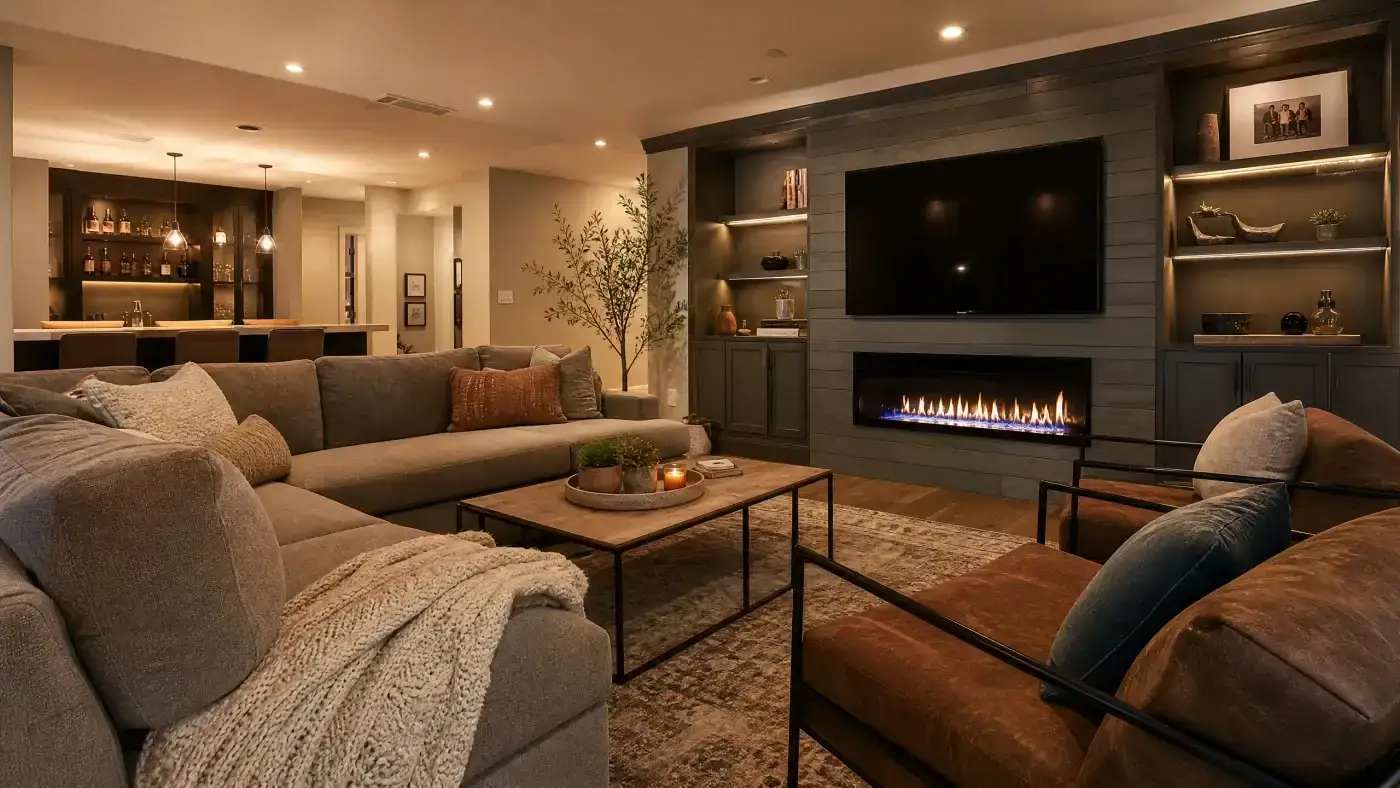
Basement finishing in Rhode Island seals and insulates cold walls. Here at Owens Corning by Lux Renovations, we winterize basements. Our system resists moisture where paper-faced drywall fails. Finishing pays back in usable rooms and lower heating bills. Cold air, damp block walls, and heat loss hit RI basements hard.
Basement Finishing In Rhode Island Before Cold Weather Hits
What Cold Weather Actually Does To An Unfinished Basement
An unfinished basement is the raw, below-grade level of your home with exposed concrete walls, bare floor, and no insulation between you and the frozen ground outside. When temperatures drop, that concrete pulls heat straight out of your house. Basement finishing in Rhode Island is the fix that stops the cold at the wall.
Bare concrete stays cold all winter. It also sweats. Warm indoor air hits the chilled wall and leaves condensation behind.
That daily cycle of damp and cold is where most unfinished basement problems begin. Left alone, it quietly drives up your heating bill and slowly damages anything stored down there.
Why Rhode Island Basement Moisture Problems Get Worse In Winter
Cold walls and warm air are a recipe for water. The concrete surface can sit well below the dew point of the air inside your home. Moisture then forms on the block just like it does on a cold glass of water.
That moisture feeds mold, warps stored boxes, and leaves a musty smell that creeps upstairs. These are the basement moisture problems homeowners notice first, usually after the holidays.
Drywall makes it worse. Paper-faced drywall soaks up that dampness and grows mold behind the paint where you can’t see it. Our basement finishing services use inorganic wall panels that don’t absorb water or feed mold.
That difference is the heart of the basement finishing system vs drywall question in a cold, damp climate.
How To Winterize A Basement In Rhode Island The Right Way
Winterizing starts at the walls. The goal is to break the path between the cold concrete and your warm living space so the surface never gets cold enough to sweat.
Simple basement insulation ideas like stuffing fiberglass batts against bare blocks often trap moisture instead of stopping it. Our system insulates with a moisture-resistant panel that seals the wall and holds an R-value rated for New England.
Learning how to winterize a basement also means addressing the floor, rim joists, and any drafty windows. Our crews handle the full envelope so cold air has nowhere to sneak in. Our basement finishing easily tackles these conditions.
The payoff shows up on your thermostat. When the basement stops leaking heat, the whole house holds temperature better through a cold snap.
Is It Worth Finishing A Basement In Rhode Island
The honest answer is yes for most homes, and the reasons stack up in cold months. Whether it’s worth finishing a basement comes down to what you gain: usable square footage, lower energy loss, and a dry space that stays that way.
An unfinished basement is dead space you heat by accident and never enjoy. Finishing turns it into a family room, home office, or guest suite you actually live in year-round.
Cost matters too. How much it costs to finish a basement depends on size and layout, and there’s a plan for most budgets. Our Rhode Island basement finishing system is built to earn that cost back.
Basement Finishing Ideas Built For Rhode Island Cold
Not every design works in a basement that fights winter moisture. The best basement finishing ideas here start with materials built for below-grade conditions, then layer on the comfort.
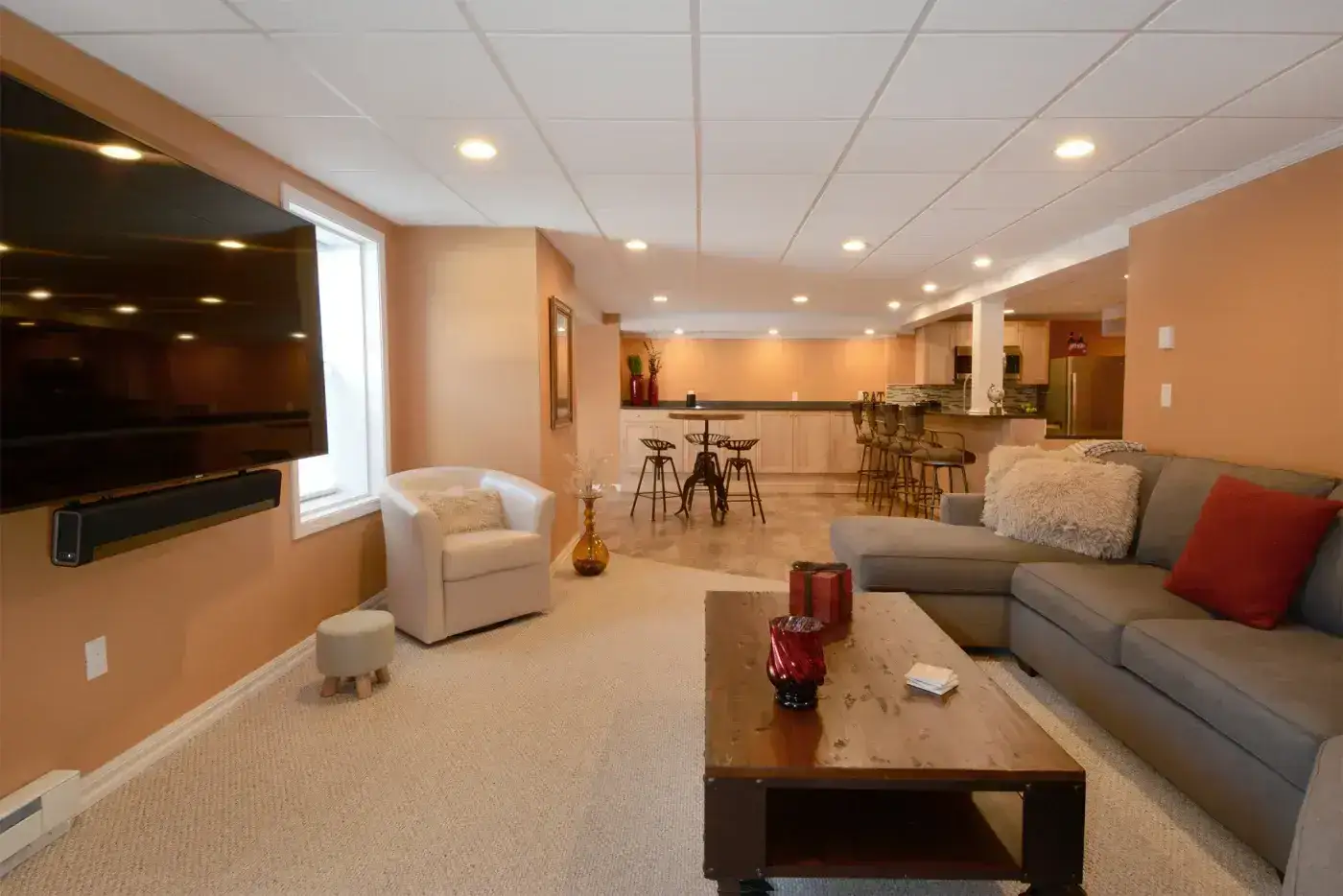
Think warm flooring, recessed lighting, and a sealed, insulated shell underneath. Whether you picture a media room, a gym, or a rental unit, the foundation has to handle cold and damp first.
The same Owens Corning basement finishing system performs where standard framing and drywall fail. Our New Hampshire basement finishing designs show how smart planning maximizes a below-grade footprint.
Good design and a warm, dry shell go together. That combination is what keeps a finished space comfortable through the coldest months.
Schedule Your Rhode Island Basement Finishing Consultation
Cold weather is the best time to see what an unfinished basement is costing you in comfort and heat. Here at Owens Corning Basement Finishing Systems by Lux Renovations, we finish basements that stay warm and dry through winter.
Our crews will walk your space, measure the envelope, and show you exactly where cold air and moisture are getting in. You’ll get a clear scope and a straight answer on cost before any work starts.
Ready to stop heating a space you never use? Schedule a consultation, and we’ll build a plan around your basement, your budget, and the climate, making your basement the perfect picture of basement finishing in Rhode Island.
Common Questions About Basement Finishing In Rhode Island
Cold weather raises a lot of practical questions about below-grade space. Here are the ones homeowners ask us most before they finish.
How long does basement finishing in Rhode Island take?
Most jobs move quickly once we measure and confirm the scope. Our Owens Corning wall panels are inorganic, so they resist moisture and won’t grow mold the way paper-faced drywall does. Sealing the concrete keeps the surface warm enough that it stops sweating.
What does a finished basement cost in Rhode Island?
Cost depends on the size, layout, and features you want, so there’s no single number. We give you a firm scope and price after we measure your space. That way you know exactly what the project involves before work begins.
Will a warmer finished basement lower my heating bill?
Warmth is only part of the return. Basement finishing cuts heat loss through cold concrete and adds usable living space. Most homeowners find the comfort and added square footage well worth it.