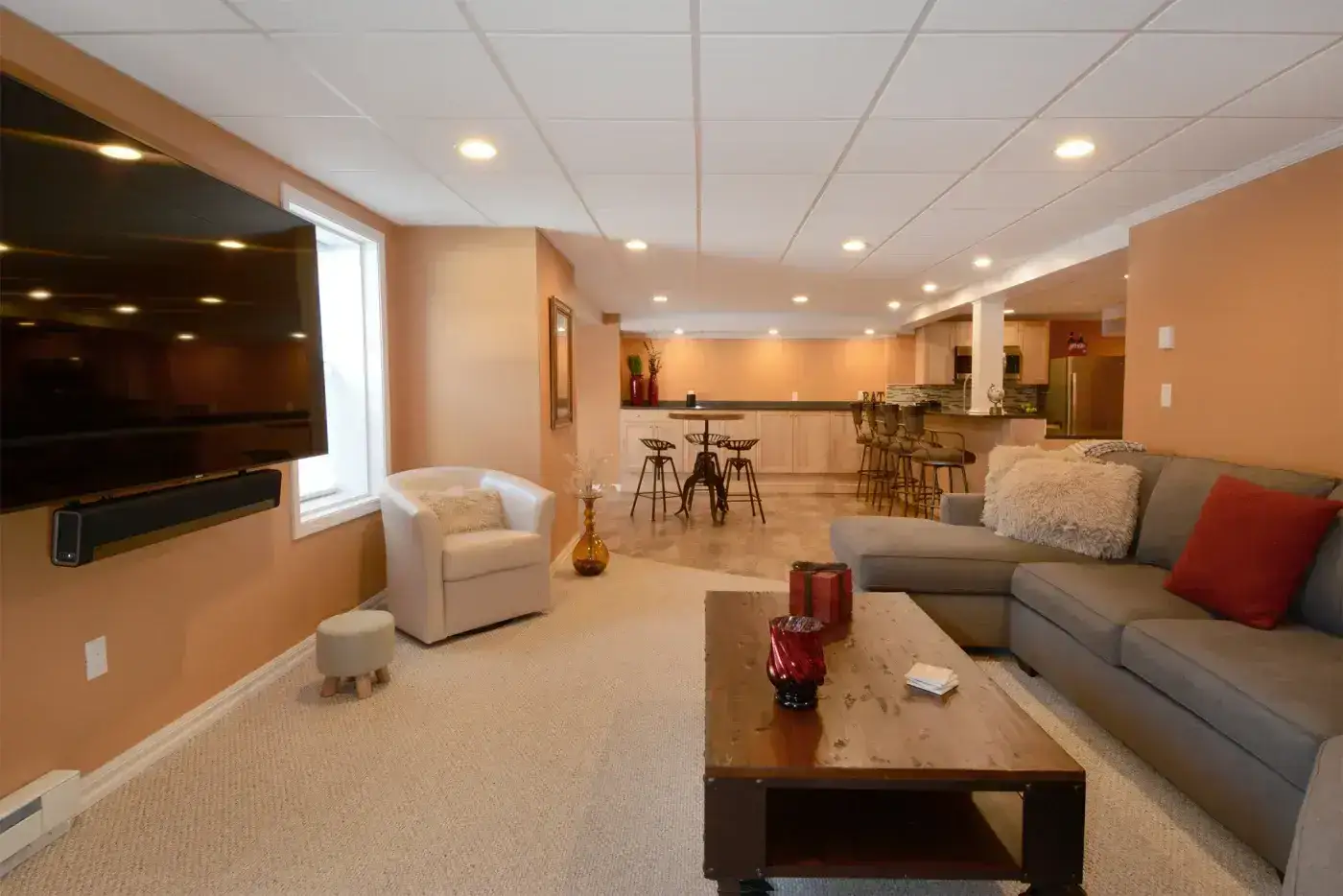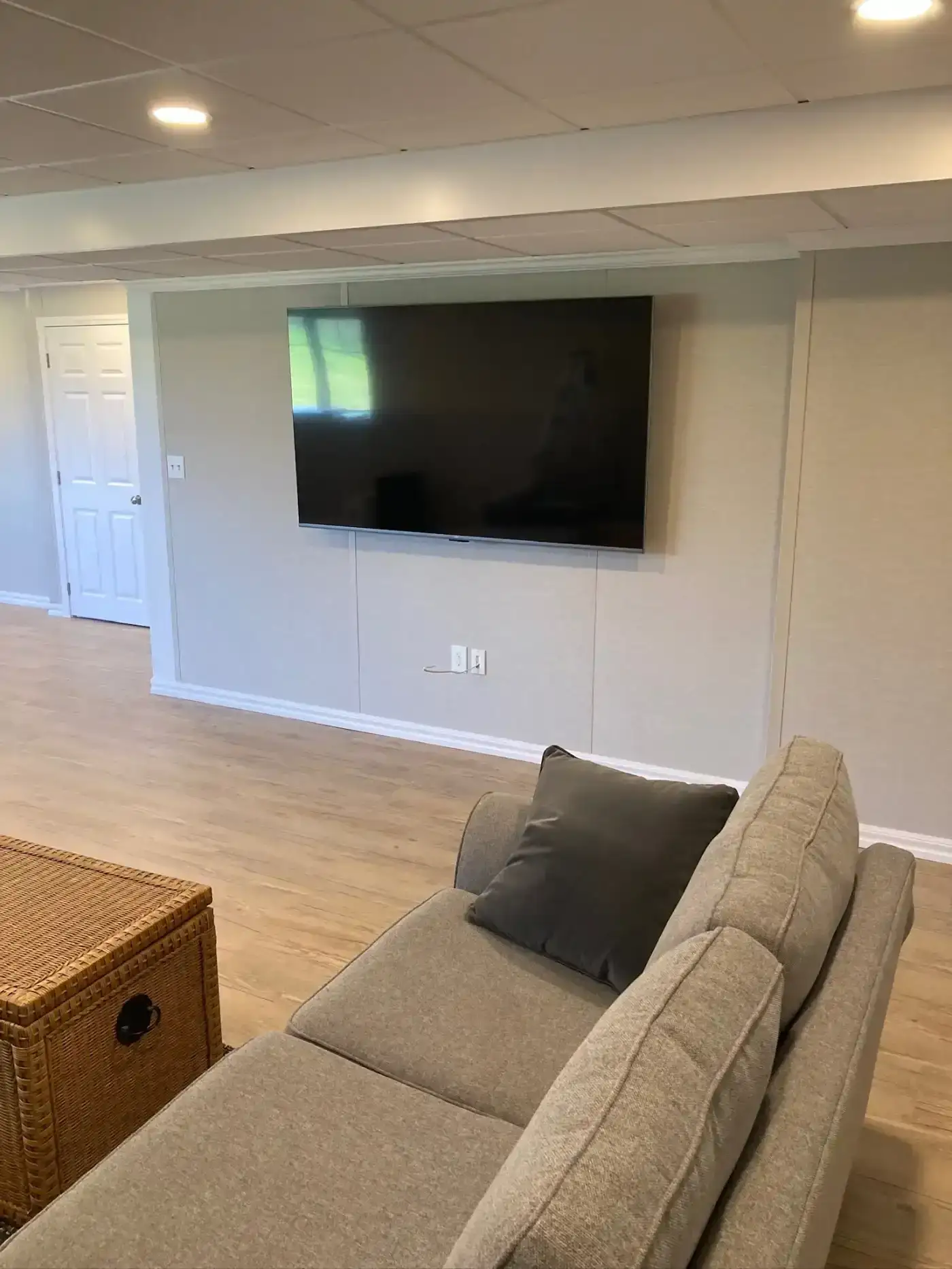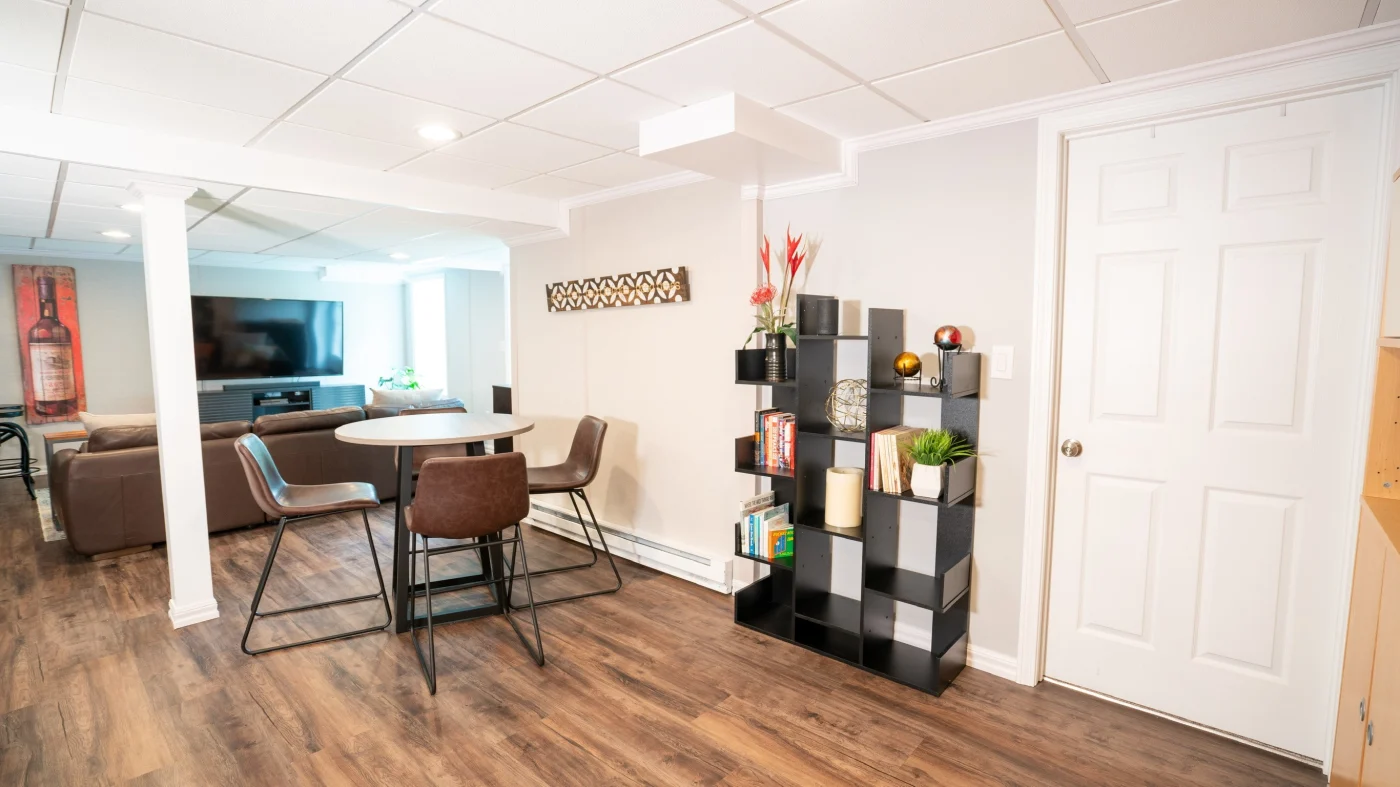

Does Connecticut Basement Finishing Add Energy Efficiency To Your Home?
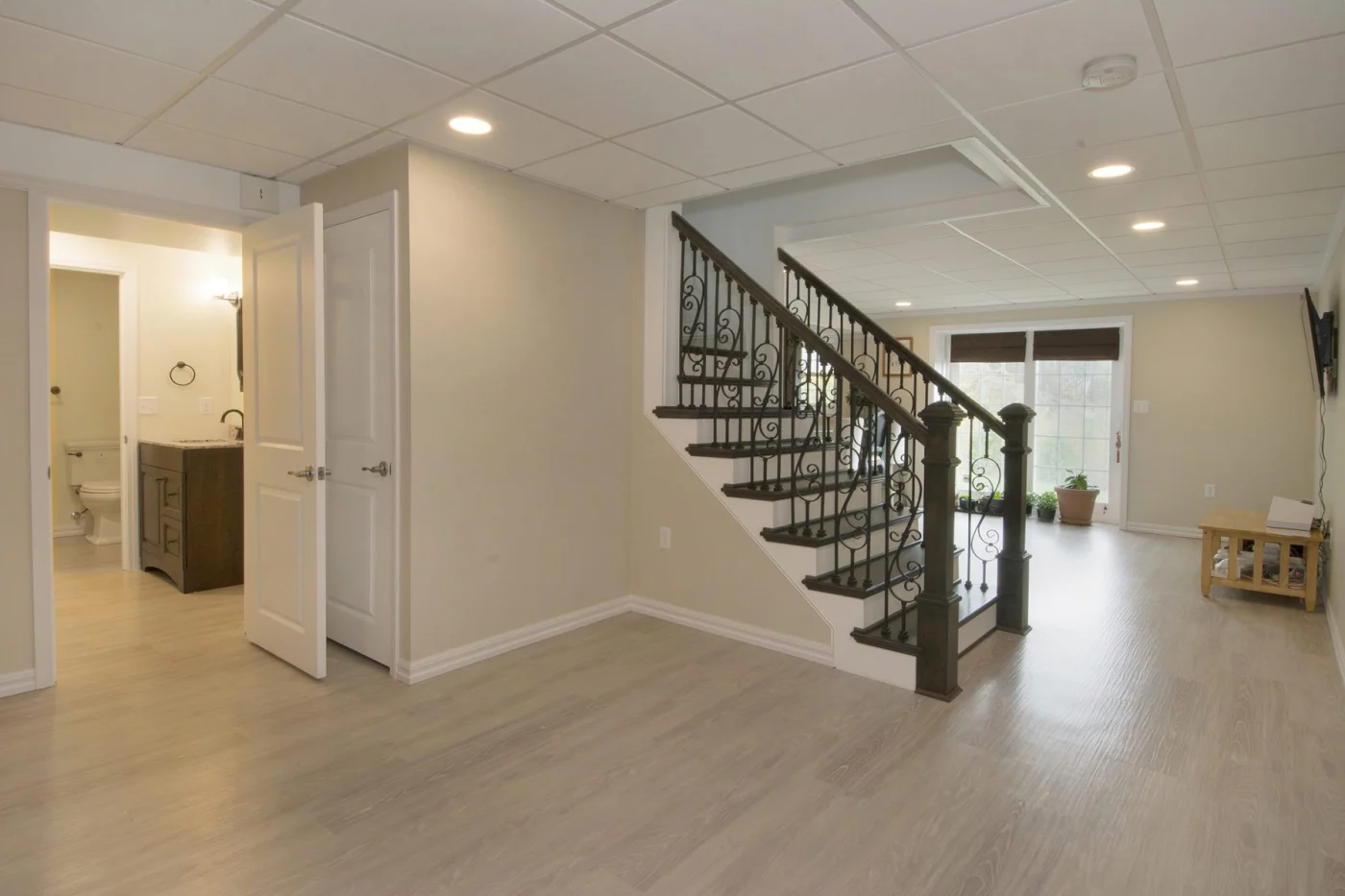
Basement finishing in Connecticut trims heat loss through cold walls. The Owens Corning System insulates to R-11, unlike bare drywall. At Owens Corning Basement Finishing Systems by Lux, we serve the region with different basement remodeling options. A finished basement rarely pays for itself in energy savings alone, because comfort and usable square footage are the real returns you feel.
How Energy-Efficient Is Basement Finishing In Connecticut?
What A Finished Basement Actually Does For Your Energy Use
A finished basement is an unfinished concrete space turned into a living area with insulated walls, flooring, and a ceiling. That raw concrete is the coldest surface in most homes. It pulls heat straight out of the rooms above it all winter long.
That’s where basement finishing in Connecticut starts paying you back. Insulated walls slow the heat loss that a bare foundation lets through. The result is a home that holds its temperature more evenly.
You won’t see a bare concrete basement’s costs disappear from your energy bill overnight. But you’ll feel the floors above stay warmer, and your furnace will cycle less to keep up with your chosen temperature.
Had It With New England Basement Finishing Contractors? Have We Got A Surprise For You.
How Basement Finishing Changes Comfort In Winter
Cold air sinks and settles in a basement. When that space sits uninsulated, the chill radiates up through the first floor. Your thermostat reads warm while your feet stay cold.
Insulating the foundation walls is the single biggest move. The Owens Corning basement finishing system uses inorganic insulated panels rated to R-11, which measures how well a wall resists heat flow. Higher R-value means less heat escaping through the concrete, turning your cold room into a comfortable place to spend time.
Good basement finishing also accounts for moisture. Concrete breathes, and organic materials like paper-faced fiberglass trap dampness against the wall. Our panels don’t, so they hold their insulating value season after season.
That matters for basement finishing in the Tri-State Area, where humid summers and hard winters both push on your foundation. A wall system built to shrug off moisture keeps working when a drywall wall would sag.
A Connecticut Basement Finishing System vs. Drywall: Comparing The Two Options
Traditional drywall over wood studs is the old default. It looks finished on day one. The trouble shows up later, when basement humidity works into the studs and paper backing.
Here’s the honest comparison for basement finishing in Connecticut:
- Repairs: A damaged panel unclips and swaps out. Damaged drywall means cutting, patching, taping, and repainting.
- Insulation value: Our panels come rated to R-11 out of the box. A framed drywall wall depends on batts stuffed behind it, which settle and lose value over time.
- Moisture handling: Drywall and wood absorb water and can grow mold. Our inorganic panels don’t feed mold or rot.
For energy specifically, the difference is consistency. A drywall wall matches our R-value the day it’s installed. It rarely holds that number after a few damp summers.
Does Basement Finishing Really Save On Energy Bills?
This is the question most homeowners really want answered. The straight answer: yes, but modestly, and it depends on your starting point.
If your basement is currently bare concrete with no insulation, finishing it will noticeably cut the heat bleeding out of your home. Homes with the leakiest foundations see the biggest change on their bills.
If you already have some insulation down there, the savings shrink. You’re refining an already-decent situation rather than fixing a major leak. The comfort still improves, but the changing dollar figure is smaller.
We tell every homeowner the same thing: don’t finish a basement for the energy bill alone. Finish it for the room you gain, and treat the steadier bills as a bonus you feel every winter.
What Basement Finishing Costs In Connecticut
Cost is the other half of the “is it worth it” math. The Owens Corning basement finishing system costs run higher per square foot than bare drywall. You’re paying for the insulation and moisture resistance built into each panel.
That premium buys you a wall that doesn’t need re-insulating or mold remediation down the road. Spread over the years you’ll use the space, the numbers narrow.
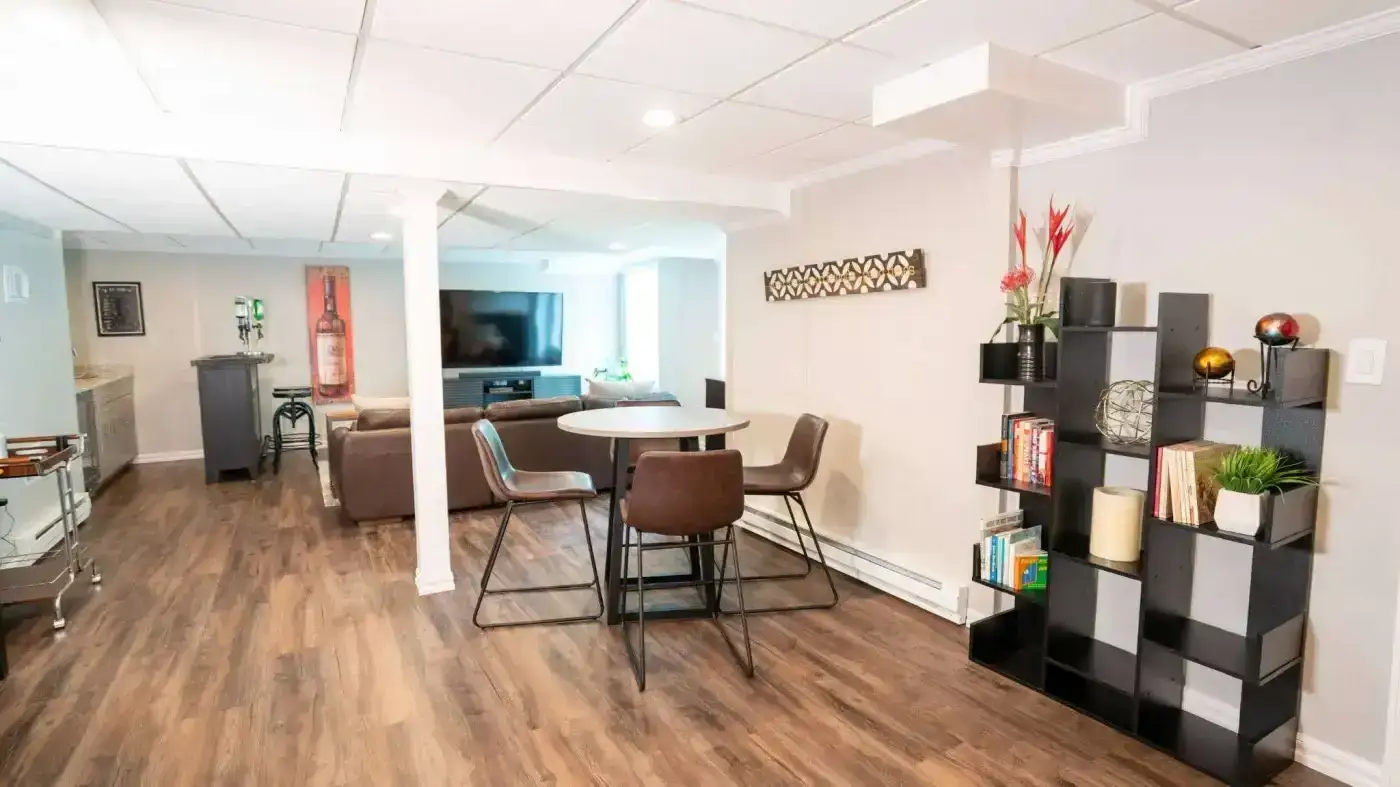
Whether finishing a basement is worth it comes down to how you use your home. If that lower level becomes a family room, home office, or guest space, the added square footage carries real value. Our certified installers do the work that makes the space last and help you with basement finishing ideas, too.
Every basement is different in slab moisture, ceiling height, and layout. That’s why we walk your space in person before quoting a number, so the estimate reflects your actual foundation.
Schedule Your Connecticut Basement Finishing Estimate Today
Ready to see what your lower level could become? At Owens Corning Basement Finishing Systems by Lux Renovations, we handle basement finishing in Connecticut with insulated panels built for our damp, cold climate.
You’ll get a walkthrough of your foundation, honest talk about energy savings versus comfort, and a written report and itinerary with no surprises. Schedule your free estimate for basement finishing in Connecticut with Lux Renovations, and we’ll show you the panel system in person, on your schedule.
Common Questions About Basement Finishing In Connecticut
Homeowners across the region ask us the same handful of questions before they commit to any changes. Here are the answers we give most often about basement finishing ideas and services.